Big glass is the reason many people buy in Miami. A wall of windows on Brickell, a lanai opening in Coral Gables, a corner unit in Sunny Isles with water on two sides. Then the first August afternoon hits, and the living room turns into a greenhouse. Covering large windows is not the same job as covering a standard bedroom window. The spans are wider, the weight is higher, the sun is stronger, and the treatment has to look intentional from inside and from the street. This guide walks through what actually works on floor-to-ceiling glass in South Florida, and how to choose between the main options.
What counts as a large window?
There is no official cutoff, but in practice a window becomes "large" when a standard off-the-shelf treatment stops working well. That usually happens in one of these situations:
- Floor-to-ceiling glass. Common in Miami high-rises and newer homes. The shade has to travel a long drop and still stop cleanly at the floor.
- Wide window walls. A single run of glass across a living room, often split by thin mullions or no mullions at all.
- Sliding glass doors and lanai openings. People walk through these every day, so the treatment has to move out of the way completely.
- Clerestory and two-story windows. Glass that is simply out of reach without a ladder.
Each of these asks for slightly different hardware. The good news is that the product families overlap, so one design language can cover every opening in the home.
Why is covering large windows harder in Miami?
Size alone is manageable. Size combined with South Florida conditions is what makes planning matter.
- Sun and heat. West and south exposures take direct afternoon sun for much of the year. Large glass lets in more heat and more UV, which fades floors, rugs and upholstery.
- Glare on screens. A wall of glass behind a TV or a home office desk can make a room unusable for part of the day.
- Humidity. Some materials warp or sag over wide spans in a humid climate. Fabric choice and hardware quality matter more than they would on a small window.
- Impact windows and building rules. Many condos restrict drilling into impact frames and require a white or neutral backing visible from outside.
- Reach and weight. A wide fabric shade is heavy. Pulling a chain on a long, heavy shade twice a day wears out clutches and cords quickly.
What are the best options for floor-to-ceiling glass?
Most large-window projects in Miami come down to four families of products. Many homes use two of them together. The comparison table below this article lays them out side by side.
Roller shades and solar shades
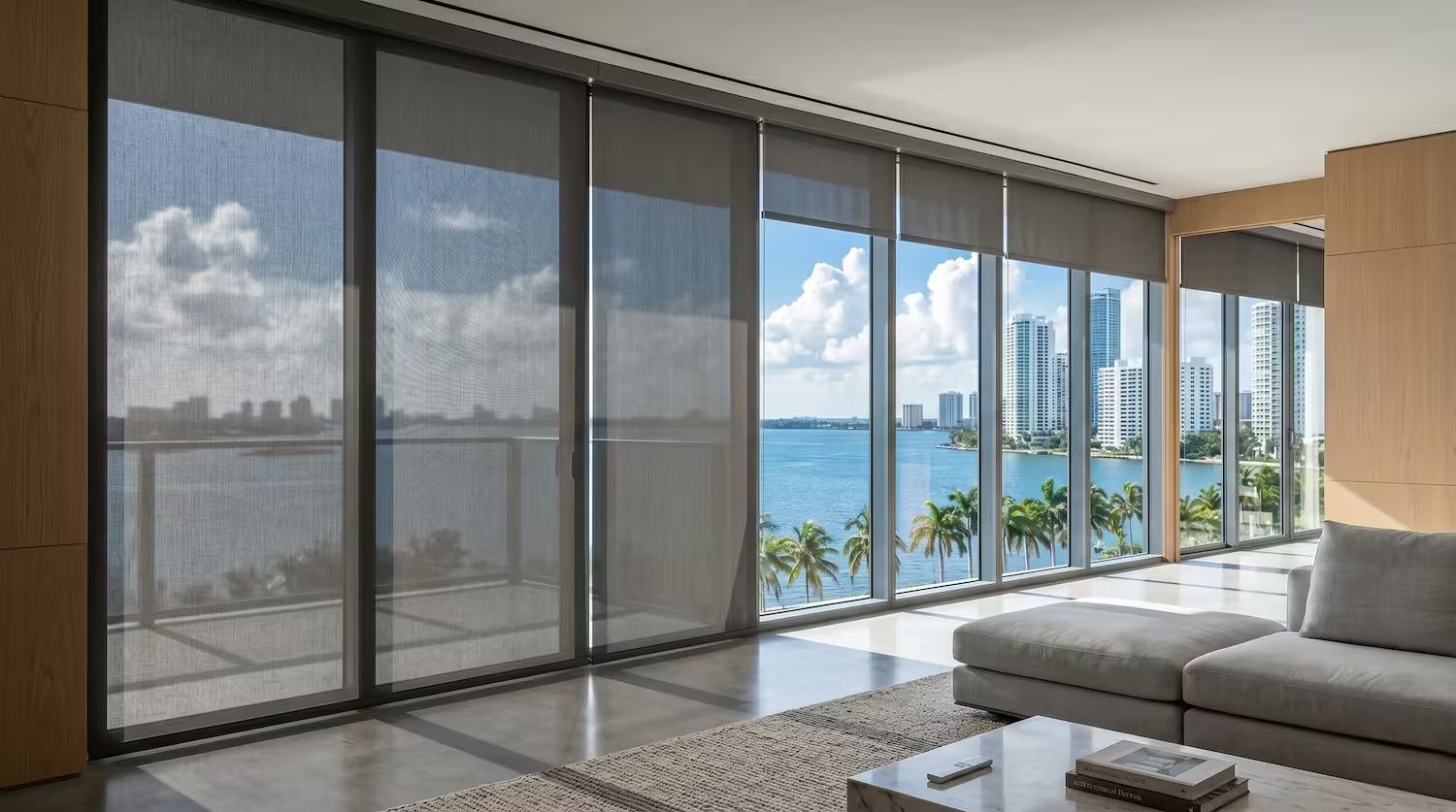
Roller shades are the most common choice for big glass in modern Miami interiors. When raised, the fabric rolls into a compact tube that can hide in a fascia or a ceiling pocket. When lowered, it reads as one clean surface. Solar screen fabrics are the standout for view-side windows. They cut glare and UV while keeping the skyline or water visible. Lower openness fabrics block more light and heat; higher openness fabrics keep the view brighter. You can browse fabrics and styles on our custom shades page.
For very wide glass, the shade is often split into several panels that line up at the same height. A good installer plans the split points to fall on mullions or wall returns, so the seams are barely noticeable.
Dual roller shades
A dual shade holds two fabrics in one bracket: usually a solar screen in front and a blackout or room-darkening fabric behind. You get daytime view and glare control plus full nighttime privacy, without stacking two separate systems on the wall. This is a strong choice for primary bedrooms with floor-to-ceiling glass.
Sliding panel tracks
Sliding panels are wide fabric panels that glide on a multi-channel track, a bit like a modern version of vertical blinds. They are made for wide openings and sliding doors because the panels stack neatly to one side and leave the walkway clear. They also look architectural on very tall glass. See how they work on our sliding panel track page.
Drapery on a ceiling track
Ripple-fold or pinch-pleat drapery on a recessed ceiling track softens a room full of hard glass and stone. It stacks to the sides, so the view stays open when the panels are drawn back. Drapery is often paired with a solar roller shade behind it: the shade handles sun and UV, and the drapery adds warmth, sound softening and night privacy.
Should large windows be motorized?
For most large windows, motorization is the most practical upgrade you can make. It is not only a luxury feature. On big glass it solves real problems.
- Weight. Wide and tall shades are heavy. A motor lifts them smoothly every time and takes the strain off clutches and chains.
- Reach. Clerestory and two-story windows are unreachable without a motor.
- Alignment. A bank of shades raised by hand ends up at different heights. Motorized groups move together and stop at the same line.
- Sun schedules. Shades can lower themselves before the afternoon sun hits and raise again in the evening, protecting furniture even when nobody is home.
- Safety. No loose cords or chains, which matters in homes with children and pets.
We install motor systems from Somfy, Lutron, Hunter Douglas PowerView and Rollease Acmeda. Rechargeable battery motors work well where running new wiring is hard, such as a finished condo. Hardwired motors make sense in new construction or renovations. Both can run on a remote, wall keypad, app or voice assistant. Learn more on our motorization page.
How do you keep the view while controlling heat and glare?
This is the question behind most large-window projects in Miami. People want the view, just not the heat, the glare or the faded sofa. A few principles help.
- Match fabric openness to the exposure. West and southwest glass needs a tighter weave to tame afternoon sun. East-facing glass can use a more open weave and keep a brighter view.
- Choose a darker interior face for view-through. Darker solar fabrics are usually easier to see through than light ones, because they reduce reflected glare on the inside.
- Use a white or light exterior face where required. Many buildings ask for this, and it can reflect some heat back outside.
- Layer instead of compromise. A solar shade for daytime and a blackout layer or drapery for night gives you both outcomes without choosing one.
- Automate the timing. The best fabric in the world does nothing if it is rolled up at 4 PM on a west wall.
How do you get privacy on a wall of glass?
Solar screens give good daytime privacy from the outside, because it is brighter outside than in. At night that flips. With interior lights on, people outside can see in through a solar fabric. For bedrooms and lower floors, plan a second layer: blackout fabric in a dual shade, room-darkening shades, or drapery on a track. For bathrooms and street-facing rooms, light-filtering fabrics offer soft light with more privacy than a screen.
How should large window shades be mounted?
Mounting is where large-window projects succeed or fail. A few things we check on every job:
- Structure above the glass. Concrete, drywall over metal studs and wood framing each need different anchors. Heavy shades need solid anchoring.
- Inside mount or outside mount. Inside mounts look clean in deep openings. Outside or ceiling mounts cover more glass and reduce light gaps.
- Impact frames. Where a building prohibits drilling into the frame, brackets go into the ceiling or surrounding wall instead.
- Pockets and fascias. A ceiling pocket hides the roller entirely. If there is no pocket, a fascia or cassette covers the tube for a finished look.
- Power location. For hardwired motors, the power source is planned before drywall is closed. For battery motors, the charging port is placed where you can reach it.
What mistakes should you avoid?
- Buying stock sizes. Large glass rarely matches stock widths. Gaps at the edges let in light and look unfinished.
- Mixing too many systems in one room. One primary product per room reads calm. Several reads cluttered.
- Skipping motorization on tall glass. Manual operation on heavy shades leads to worn clutches, frayed chains and uneven heights.
- Forgetting HOA rules. Get the backing color and mounting plan approved before fabrication.
- Choosing fabric from a tiny swatch. Openness and color look very different on a 10-foot panel in full Miami sun. Ask to see larger samples at the window.
Who is Miami Shades?
Miami Shades is a window treatment specialist serving Miami and South Florida from 2750 NE 183rd St in Aventura. The team designs, installs, motorizes and repairs shades, blinds, shutters, sliding panels and drapery for condos, homes and commercial spaces across Miami-Dade, Broward and Palm Beach. We install Somfy, Lutron, Hunter Douglas (including PowerView), Graber, Levolor and Rollease Acmeda. Miami Shades is rated 5.0 from 30 reviews. Call (786) 373-7374 to talk to the team.
How do I get started?
Start with a photo. Send a picture of your windows and a rough idea of what bothers you most, whether that is heat, glare, privacy or reach. We will reply with options and a free quote. For larger projects, we visit, measure every opening, bring full-size fabric samples to the glass, and show motorized options in person. Get your free quote today.
Frequently Asked Questions
What is the best window treatment for floor-to-ceiling windows in Miami?
For most homes and condos, a motorized solar roller shade is the best starting point. It controls glare, heat and UV while keeping the view. Add a blackout layer or drapery in bedrooms for night privacy.
Can one shade cover a very wide window?
Sometimes, but wide glass is often split into several aligned shades. Splitting keeps each shade within its size limits and lets the seams fall on mullions, so the wall still reads as one surface.
Are sliding panels or roller shades better for sliding glass doors?
Sliding panels are ideal when you want the opening fully clear and a strong architectural look. Roller shades work well when mounted above the door frame and are easier to motorize in groups.
Do motorized shades need new wiring?
No. Rechargeable battery motors from Somfy, Lutron, Hunter Douglas PowerView and Rollease Acmeda need no new wiring. Hardwired motors are a good option in new construction or during a renovation.
Will solar shades give me privacy at night?
Not fully. Solar shades give good daytime privacy, but at night with lights on, people outside can see in. Use a dual shade with a blackout layer, or add drapery, where night privacy matters.
Can shades be installed without drilling into impact windows?
Yes. Brackets can be mounted into the ceiling or the wall around the opening, leaving the impact frame untouched. We confirm your building's rules before anything is made.
How do I get a price for my large windows?
Send a photo of your windows for a free quote, or book an in-home visit. Pricing depends on size, fabric and motorization, so we quote each opening in writing.