Run the AC eleven months a year and your electric bill becomes a fixed cost of living in Miami. So when a window-treatment company promises a solar shade will "pay for itself," it's fair to ask: by how much, and how fast? This guide gives you the honest numbers — real savings, real Florida Power & Light rates, and a realistic payback — so you can decide with your eyes open.
The short version: energy-efficient window treatments in Miami genuinely lower your cooling load, especially on sun-facing glass with automation. They are not a get-rich-quick scheme on your utility bill. The full value shows up across three lines — energy, comfort, and protecting what's behind the glass.
The Miami Math: Why Your AC Never Stops
In a Miami home, cooling is the single biggest slice of the power bill — often around half of annual electricity use, far higher than the national average because the air conditioner runs nearly year-round. As of 2026, Florida Power & Light's all-in residential rate is roughly 14.5 cents per kWh, and a typical 1,000-kWh monthly bill runs about $135 to $145.
A huge share of that cooling load walks right in through your windows. Unshaded glass facing west or south can dump enormous amounts of solar heat into a room during peak afternoon hours — exactly when electricity demand and indoor temperatures are highest. Cut that solar heat gain and your AC cycles less. That's the entire premise of an energy-efficient window treatment.
How Solar Shades Actually Cut Cooling Load
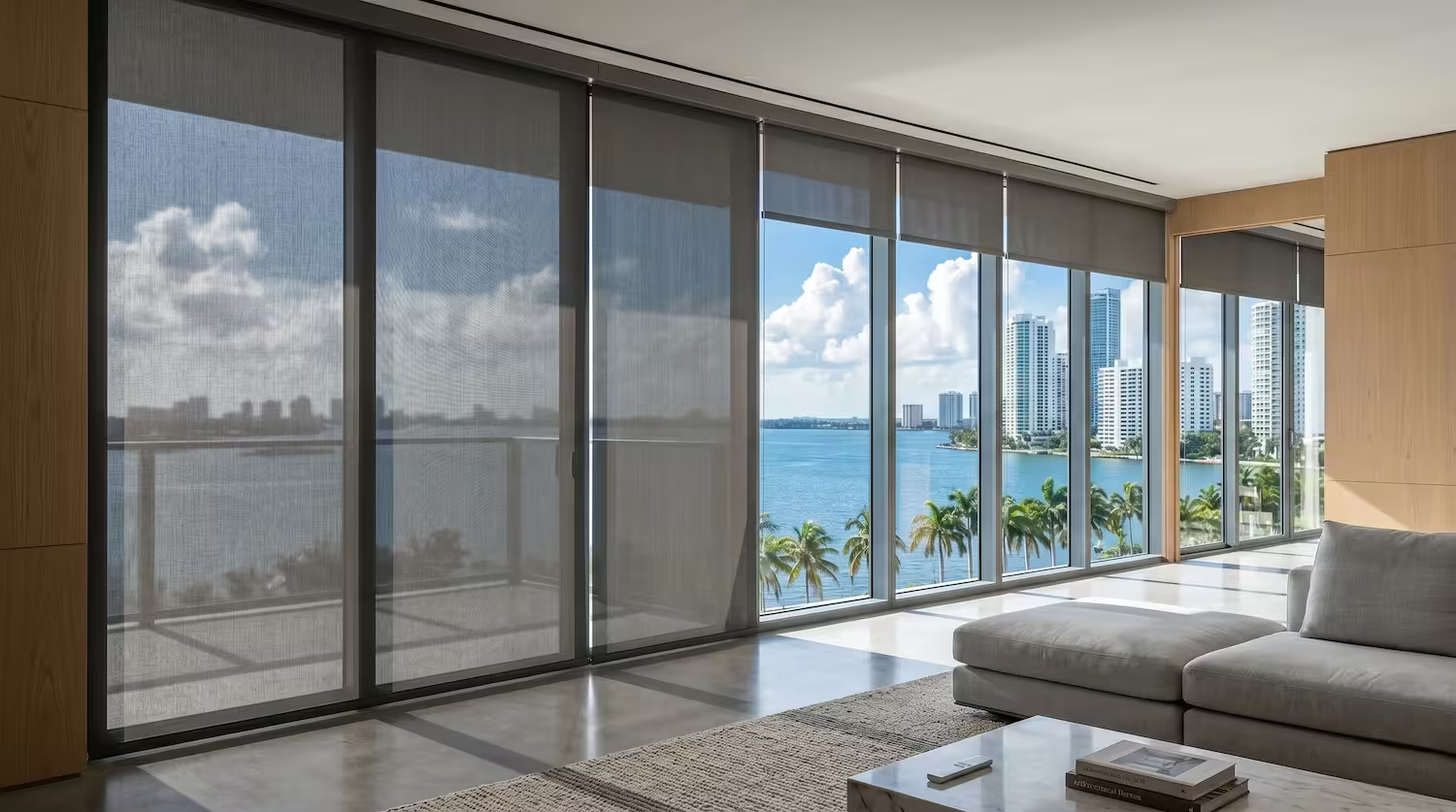
Solar shades work by stopping heat before it becomes your problem. A solar shade's "openness factor" — 1%, 3%, 5%, 10% — describes how tightly the fabric is woven. A tighter weave (1–3%) blocks more solar heat and UV; a more open weave (5–10%) preserves more of the view while still cutting glare. Quality solar fabrics reject a large majority of incoming solar energy on sun-facing glass.
The U.S. Department of Energy and Oak Ridge National Laboratory have measured the effect. Studies of interior shades found cooling-season energy reductions in the mid-single digits to low-double digits, with the best results on tightly fitted shades over heavily glazed, sun-exposed rooms. In plain terms: expect solar shades to trim roughly 10–15% of your cooling energy across a typical home — and more in absolute dollars if you have a lot of west- or south-facing glass.
Automation: Where the Real Savings Come From
A shade only saves energy when it's down at the right time. That's the catch with manual shades — nobody is home at 3 p.m. to lower them, which is precisely when the sun is hammering the glass. Automation closes that gap.
With motorized shades on a schedule, your west-facing living room shades drop automatically during peak afternoon sun and rise again in the evening for the view. Tie them to a sun sensor or your smart-home system and the house manages its own solar load all day, every day. This is why automation is the multiplier on energy savings: it captures the reductions a manual shade leaves on the table. See how it works on our motorized shades page.
The Real ROI Math (at 2026 FPL Rates)
Let's put numbers to it, honestly. Take a Miami home using about 12,000 kWh a year — roughly $1,740 in electricity at 14.5 cents per kWh. If cooling is half of that, you're spending around $870 a year to run the AC. Trim cooling energy by 10–15% with solar shades and automation and you save roughly $90 to $130 a year, more if your home is heavily glazed and sun-exposed.
On a targeted solar-shade package for your sun-facing rooms, that energy savings alone pays back over a number of years, not months — anyone promising a three-year payback on energy savings is selling, not calculating. The honest case is that the energy savings is real and ongoing, and it lands alongside two other returns that are easy to undervalue: comfort and protection. When you count those, the math gets a lot more attractive.
Beyond the Energy Bill: UV, Comfort & Resale
Solar shades block the bulk of ultraviolet light, the thing that fades hardwood floors, artwork, and upholstery. In Miami's sun, replacing a sun-bleached floor or a faded sofa costs far more than the shades that would have prevented it — so UV protection is a real, if hidden, line on the ROI sheet.
Comfort is the other return. Killing the afternoon heat gain means no more rooms you avoid from 2 to 6 p.m., no more hot spots the thermostat can't fix, and a more even temperature the AC maintains with less effort. Automated, energy-smart window treatments also read as a premium upgrade to buyers — a tangible feature in a Miami market where energy costs are top of mind.
Best Products for Miami Homes
Two pairings do most of the work in our installs. For the fabric, Hunter Douglas Designer Roller Shades offer a deep range of solar openness factors and screen fabrics suited to bright, sun-facing Miami glass. For the motor, Somfy's Sonesse line is prized for being genuinely quiet and reliable, with battery and hardwired options and easy integration with Alexa, Google Home, and sun-sensor schedules.
The right openness factor depends on orientation and view: we'll often spec a tighter 3% weave on a blazing west exposure and a 5% on a north or shaded window. Browse the fabric options on our custom shades page, and if you're weighing materials for the long haul, our guide to shutters versus roller shades in Miami humidity compares durability head to head.
A Brickell Case Study
One of our favorite examples is a 32nd-floor Brickell condo with a wall of west-facing glass. We installed Hunter Douglas solar roller shades on Somfy motors, scheduled to close through the afternoon and integrated with Alexa. The owner, María R., told us the system "paid for themselves in AC savings within a year" — a result driven by an unusually large, sun-blasted glass area and a high prior bill. Your mileage depends on your glass, but the direction is always the same: less solar heat in, less work for the AC.
Curious what energy-efficient window treatments would do for your specific exposure? Book your free in-home consultation and we'll assess your glass orientation, recommend openness factors, and give you an honest savings estimate for your home. For high-rise owners, our guide to condo window treatments and HOA approval covers the board side.
Frequently Asked Questions
Are motorized shades worth the cost in Miami?
For most Miami homes, yes — but for the full picture, not the energy bill alone. Motorization roughly maximizes the energy savings of solar shades by closing them automatically during peak sun, and it adds daily convenience, UV protection for your floors and furniture, and resale appeal. Energy savings pays back over years; the comfort and protection value lands from day one.
How much can solar shades really lower my AC bill?
Realistically, expect to trim around 10–15% of your cooling energy with solar shades plus automation, and more in absolute dollars if you have extensive west- or south-facing glass. At 2026 FPL rates, that's often $90–$130-plus a year for a typical home, with heavily glazed homes saving more.
What openness factor is best for Miami sun?
It depends on the window's orientation and your priorities. A tighter 1–3% weave blocks the most heat and UV and is ideal for blazing west and south exposures; a 5–10% weave preserves more view and works well on shaded or north-facing windows. We spec different factors room by room.
Do solar shades block the view?
No — that's their advantage over blinds or blackout shades. Solar shades cut glare and heat while you still see through them to the bay, ocean, or street, especially in the more open 5–10% weaves. For full darkness in bedrooms, we pair a solar shade with a blackout shade on a dual roller.
Will closing shades during the day make my home dark?
Not noticeably with solar fabrics — they filter harsh sun while still letting daylight through, so rooms stay bright but cooler. With automation, you can also schedule them to lower only during the hottest hours and rise the rest of the day, balancing light, view, and savings automatically.