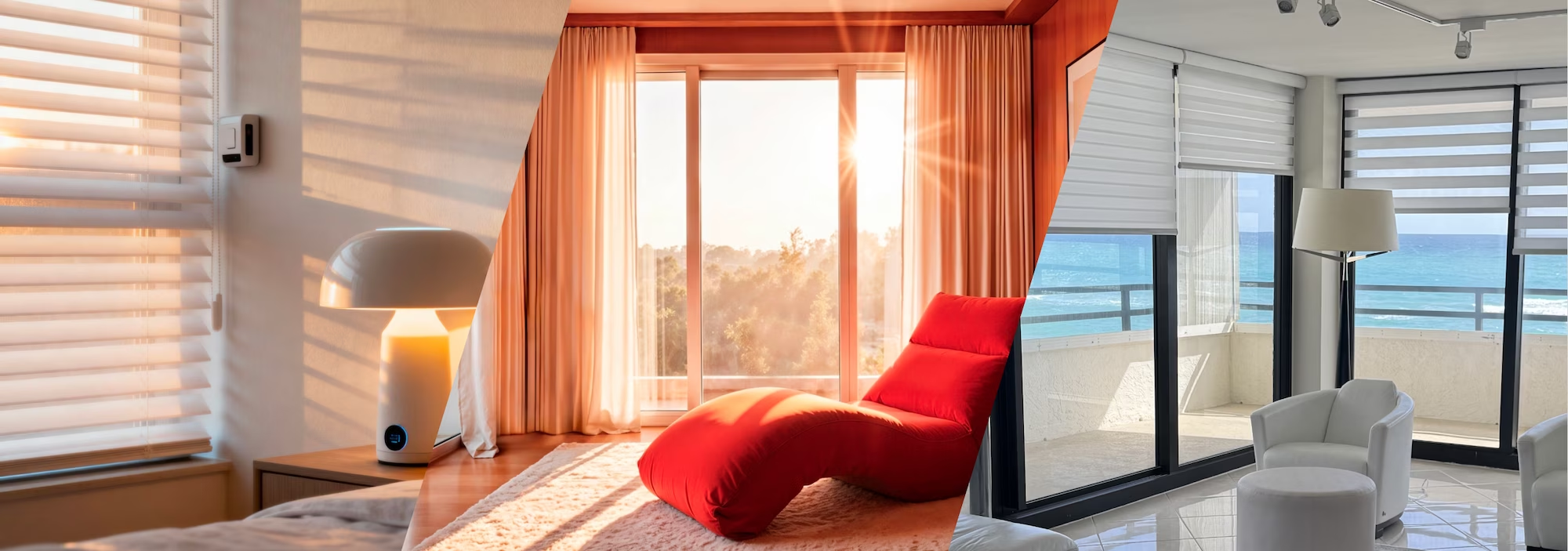
If you own a condo on Brickell Avenue, in Aventura, or along Miami Beach, your windows are working overtime. Floor-to-ceiling glass, relentless afternoon sun, salt air off the bay, and a condo board with firm opinions about what can hang in front of the glass — high-rise window treatments in Miami come with a layer of rules that single-family homes never deal with.
This guide walks owners and HOA boards through what actually matters: which products clear board approval, how Miami's hurricane code shapes your options, the approval process step by step, and what drives the price. Miami Shades has outfitted condos across Brickell, Aventura, and the Beaches since 2016, and the same questions come up on nearly every project.
Why High-Rise Condos Are a Different Animal
A house gives you small, framed windows and a backyard nobody can see into. A Miami high-rise gives you the opposite: walls of glass facing west or south, neighboring towers looking straight in, and sun intense enough to fade a sofa in a single season. The treatment that solves all three has to manage heat and glare, deliver privacy on demand, and still look clean from forty floors up.
Three constraints make high-rise glass unique. First, the windows are usually impact-rated and set in narrow aluminum frames, so mounting hardware has to be precise and shallow. Second, the building's exterior appearance is governed — what your neighbors see from the street is not entirely up to you. Third, the sheer size of the glass means manual cords and chains are impractical; a 10-foot shade is not something you want to wrestle by hand twice a day.
What Condo Boards Actually Regulate
Most owners are surprised by how much (and how little) a board controls. Boards rarely care about the fabric pattern you choose for the inside of your unit. What they almost always regulate is the side that faces out.
The most common rule in Miami buildings is a uniform exterior appearance: the street-facing backing of any window covering must read as white or off-white so the façade looks consistent. That's easy to satisfy — most quality solar and roller shades are offered with a white or pearl backing regardless of the interior color you pick. Boards also typically prohibit any exterior change or penetration, restrict installation to certain hours, and require the installer to carry a certificate of insurance (COI) naming the association. None of this is an obstacle once you know it going in.
The Board-Approval Process, Step by Step
Getting approved is mostly about paperwork in the right order. Here's the sequence we use with Miami condo clients:
- Read the declarations and rules. The relevant language is usually under "alterations" or "window treatments."
- Request the architectural-modification or alteration form from property management.
- Submit the product specification sheet, an interior fabric sample, and the exterior backing color (white/off-white for most buildings).
- Provide the installer's COI naming the association as additional insured.
- Schedule the installation within the building's permitted hours and elevator/loading-dock rules.
Miami Shades provides the spec sheets, backing-color confirmation, and COI as a standard part of every high-rise quote, so most boards approve without a second round of questions. When a board has reviewed a Hunter Douglas or Somfy submission from us before, approval is often a formality.
Hurricane Code and Your High-Rise Glass
Miami-Dade and Broward sit in Florida's High-Velocity Hurricane Zone (HVHZ), where exterior windows must be impact-rated, carry a Miami-Dade Notice of Acceptance, and withstand design wind speeds up to 175 mph. Interior window treatments are not structural and don't require their own NOA — but the way they're installed still matters.
The key principle is simple: mounting your shades should never compromise the impact glass or its frame. Good installers mount inside the window opening or into the surrounding wall, not through the impact frame's seal. If your building has a post-tension slab, drilling depth near the ceiling is also limited, which is another reason battery-powered shades that mount shallow are popular in high-rises. We treat the integrity of your hurricane glass as non-negotiable on every install.
Motorization Boards Approve
For floor-to-ceiling glass, motorization isn't a luxury — it's the practical answer. The board-friendly version has two features: whisper-quiet motors and no exterior changes. Rechargeable battery motors, like the Somfy line we install most often, need no wiring, no electrician, and no alterations the board can object to. They run quietly, recharge a few times a year, and operate by remote, wall switch, app, or voice through Alexa and Google Home.
Because battery motors require zero building modification, they sail through approval far more easily than hardwired systems. You get one-tap control of an entire wall of glass, scheduled scenes that lower the shades during peak afternoon sun, and a clean look with no visible cords. Explore the options on our motorized window treatments page, then we'll match a motor and control system to your building's rules.
Fabrics and Finishes for Floor-to-Ceiling Glass and Salt Air
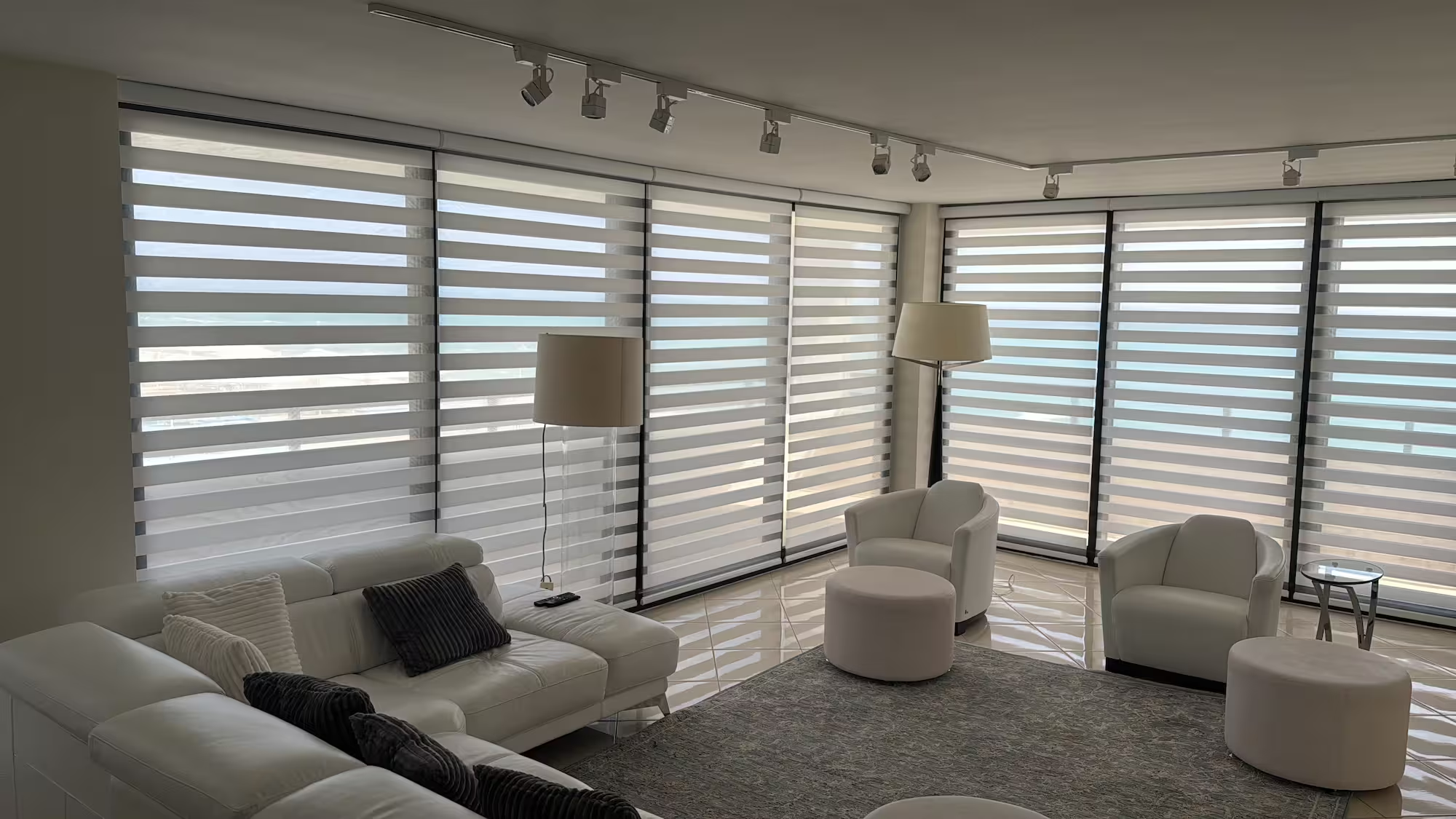
The fabric does the heavy lifting on comfort. Solar shades are specified by openness factor — a 3% or 5% weave cuts glare and blocks the bulk of UV while preserving your bay or ocean view, while a 1% weave leans toward privacy and maximum heat control. Many Miami condos use a dual-roller setup: a solar shade for daytime glare and a blackout shade behind it for sleeping.
Salt air is the other factor. On units facing Biscayne Bay or the ocean, we steer clients toward fabrics and hardware rated to resist corrosion and UV degradation, because a cheaper shade will chalk and fade within a couple of seasons on the water. Our custom shade selection includes salt-air-resistant solar fabrics built for exactly these exposures. If energy savings is your priority, our companion guide on cutting your Miami AC bill with smart solar shades breaks down the numbers.
What Drives the Cost of High-Rise Window Treatments in Miami
Pricing comes down to a few things. The size of the glass matters most, because wide floor-to-ceiling openings need larger tubes and stronger hardware. Fabric is next, and coastal-grade materials cost more than standard ones. Motorization adds a motor and control to each opening. Building rules can also shape the install, such as service elevator bookings and insurance certificates.
Ballpark figures rarely hold up on high-rise glass. The only accurate number comes from a measured quote, which is why ours is free. Book a free in-home consultation or send a photo of your windows. We will measure every opening, confirm your board's backing-color requirement, and give you a fixed price with the spec sheets you need for approval.
Working With Miami Shades on Your Building
We've made board approval routine. Since 2016 the Miami Shades team has worked across Brickell, Aventura, and Miami Beach towers, and we bring the COI, spec submissions, and white-backing confirmation to every high-rise project so your association has nothing to push back on. As one Brickell owner, María R., put it after we motorized her 32nd-floor unit: the shades "paid for themselves in AC savings within a year," sync with Alexa, and were explained start to finish in Spanish and English.
Book your free in-home consultation and we'll handle the measurements, the fabric and motor selection, and the board paperwork — so your only job is enjoying the view.
Frequently Asked Questions
Do I need HOA approval for motorized shades in my Miami condo?
In most Miami buildings, yes — but it's straightforward. Boards typically require an alteration request with the product spec, the exterior backing color (usually white or off-white), and the installer's certificate of insurance. Because battery-powered motorized shades make no exterior changes and need no wiring, they're among the easiest treatments to get approved.
Will installing shades damage my impact (hurricane) windows?
Not when they're installed correctly. A proper install mounts inside the opening or into the surrounding wall, never through the impact frame's seal, so the glass keeps its Miami-Dade rating. This is exactly why working with an installer who understands HVHZ construction matters.
Can motorized shades work without wiring in a high-rise?
Yes. Rechargeable battery motors require no electrician and no building modification, which is why they're the go-to for Miami condos. They operate by remote, wall switch, app, or voice, and recharge only a few times a year.
What color backing do condo boards usually require?
Most Miami high-rises require the street-facing side of any window covering to be white or off-white for a uniform façade. You can still choose any interior fabric color — the backing is a separate layer, and quality solar and roller shades offer compliant white or pearl backings as standard.
How long does a high-rise condo installation take?
Once your shades are manufactured, a typical one- or two-bedroom condo is installed in a single visit of a few hours, scheduled within your building's permitted hours. The longer part is usually board approval and fabrication lead time, which we manage with you from the start.