Plantation shutters are the one window treatment that becomes part of the house. Where a shade or blind reads as something you added, a well-installed shutter looks like it was always there — framed into the opening, painted to match the trim, built to outlast the furniture around it. That permanence is exactly why so many Miami homeowners want them, and exactly why the material choice matters so much. In South Florida humidity, the wrong shutter material warps, sticks, and yellows within a few years. The right one looks new a decade later. This guide walks through the decision the way our designers do it in person.
What plantation shutters are — and why South Florida homes love them
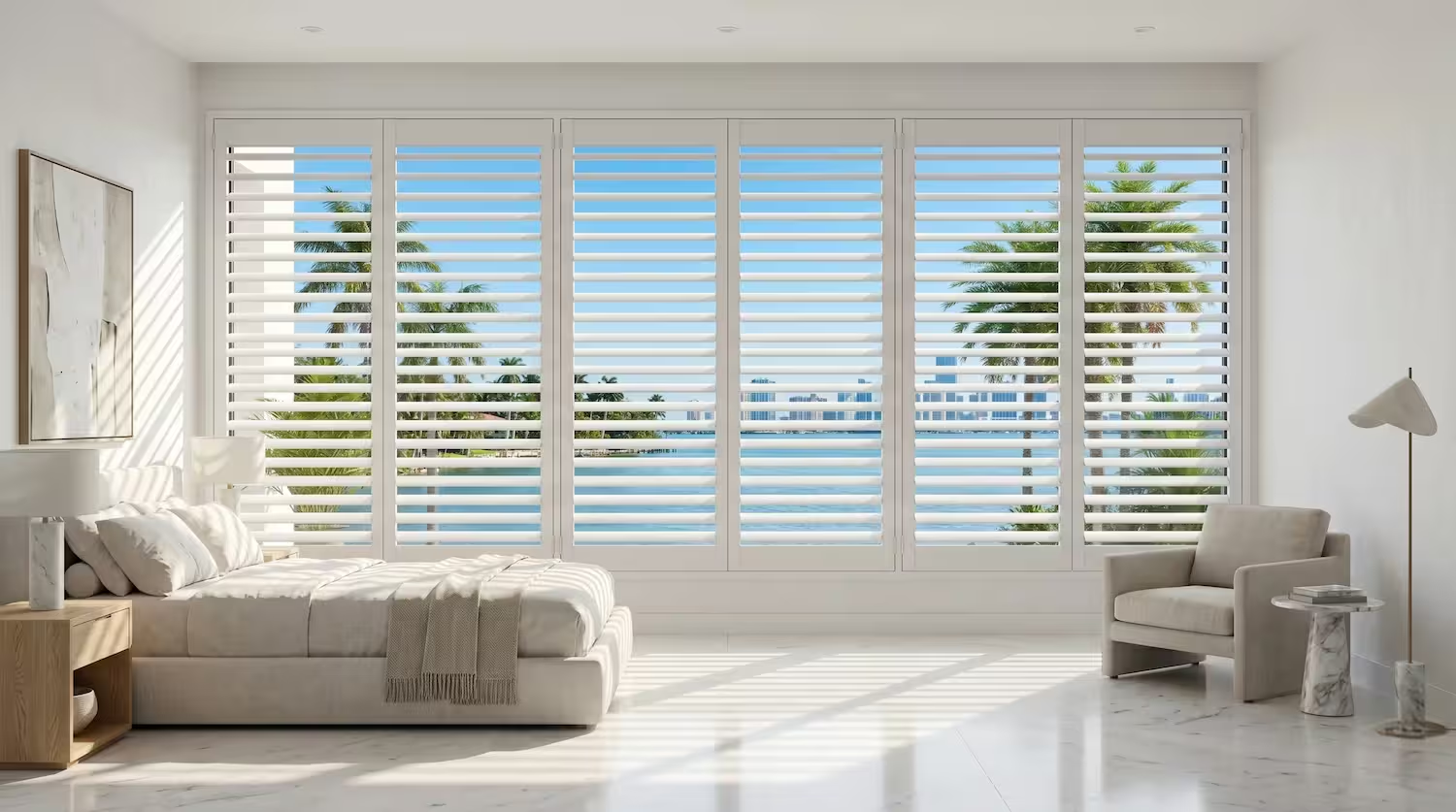
A plantation shutter is a hinged panel of wide horizontal louvers set inside a frame that mounts to the window opening. The louvers tilt together on a hidden control to dial in light and privacy, and the whole panel swings open when you want the glass clear. The "plantation" name refers to the wide louver style — typically 2.5 to 4.5 inches — versus the narrow slats of traditional colonial shutters.
In Miami, shutters do several jobs at once. They handle the relentless sun without fabric that fades. They give you precise, room-by-room privacy on a street of close-set homes. They add a clean architectural line that suits everything from a Coral Gables Mediterranean Revival to a modern Brickell condo. And because they're a fixed, custom-fitted feature, they tend to add resale value rather than depreciate — industry estimates put the return on quality plantation shutters around 75% of their cost, higher than most window treatments. If you want a treatment that reads as part of the home and lasts decades, shutters are usually the answer.
The humidity question: wood vs. composite vs. vinyl
This is the decision that matters most in South Florida, and it's where homeowners most often go wrong. All three materials look similar from across the room. They behave very differently against Miami's heat, moisture, and salt air.
Natural wood
Real hardwood (usually basswood) is the lightest option, takes paint and stain beautifully, and allows the widest louvers because the material is strong without being heavy. It is the premium, traditional choice. But wood moves with moisture. In an air-conditioned, low-humidity interior it's perfectly stable for years. In a bathroom with a shower, an open lanai, a screened porch, or a salt-air-exposed coastal room, natural wood can swell, warp, and crack over five to seven years. We reserve wood for dry, climate-controlled rooms where the homeowner specifically wants natural material.
Composite and faux wood
Composite shutters are built from engineered wood substitutes or a polymer core with a hard finished surface. They resist warping, cracking, swelling, and fading in humidity, and they look essentially identical to painted wood from normal viewing distance. For the majority of Miami homes, composite is the right call — it tolerates bathrooms, kitchens, indoor-outdoor transitions, and coastal exposure without complaint.
Vinyl
Vinyl shutters are fully moisture-proof and the most budget-friendly. The trade-offs are that vinyl louvers can't span as wide without reinforcement (so very large windows may need a divider rail), and the finish quality varies more by manufacturer. For wet rooms on a tighter budget, vinyl is a sensible, durable pick.
The fast rule we give Miami clients: natural wood only in dry, air-conditioned rooms; composite everywhere humidity, splash, or salt air is a factor; vinyl when budget leads and the openings aren't oversized.
Louver size and configuration
Once material is settled, two style choices shape how the shutters look and work: louver width and panel configuration.
Louver width typically runs from 2.5 to 4.5 inches. Wider louvers (3.5 and 4.5 inches) let in more light and view when open, throw a cleaner, more modern shadow line, and are the current default for most homes. Narrower louvers (2.5 inches) read more traditional and give a touch more privacy when closed. The wider the louver, the fewer of them across the window — which most people find looks less busy.
Configuration covers how the panels are built:
- Full-height: one set of panels covering the whole window, optionally with a divider rail so the top and bottom tilt independently. The most common and most versatile.
- Café style: panels covering only the lower half of the window, leaving the top open for light. Popular for street-facing rooms where you want privacy at eye level but light above.
- Tier-on-tier: separate upper and lower panels that open independently — maximum flexibility, ideal for tall windows.
What drives the cost of plantation shutters in Miami
Shutters are custom-built for each opening, so the price is set by your windows and your material choice rather than a list. The main factors:
- Material: composite, hardwood and vinyl are priced differently, and the right one depends on the room's humidity.
- Size of the opening: shutters are made by area, so taller and wider windows cost more.
- Louver size and configuration: divider rails, bi-fold panels and sliding door tracks add parts and labor.
- Specialty shapes: arches, angles and very tall openings take more fabrication.
- Finish: custom paint or stain colors versus standard whites.
Because shutters are a fixed feature that travels with the house and rarely needs replacing, many Miami owners treat them as a renovation-grade investment rather than a soft furnishing. For a written price per window, book a free in-home consultation or send a photo of your windows for a free quote.
Room by room: where shutters win (and where they don't)
Shutters are not automatically the right answer for every opening. Where they shine: living rooms and dining rooms where the architectural look matters, bedrooms where you want layered privacy and light control without fabric, home offices where you're dialing glare off a screen, and bathrooms — using composite or vinyl — where moisture rules out wood and fabric.
Where shutters are usually the wrong tool: very wide sliding glass doors and lanai spans, where a sliding panel track or motorized roller shade handles the width far better; and rooms where you want full blackout for sleep or media, where a dedicated blackout shade seals light more completely than louvers can. Many Miami homes end up using shutters in some rooms and shades in others — the right product per opening, not one product everywhere. Our broader guide to choosing window treatments in South Florida walks through that room-by-room logic in more depth.
Why composite is usually the Miami answer
If we had to name one default for South Florida, it's composite. The climate here is uniquely hard on window treatments: over 3,000 hours of sun a year, year-round humidity, frequent indoor-outdoor living, and salt air near the coast. Composite shutters shrug all of that off. They hold a crisp painted-white finish — the look most homeowners and most condo boards want — without the yellowing that hits some materials under UV. They don't swell shut in August. And in a Coral Gables Mediterranean Revival or a Miami Beach coastal home, they deliver the heritage shutter look while quietly surviving the environment that would punish natural wood. Closed plantation shutters also cut solar heat gain meaningfully — roughly 30% in our experience on sun-facing rooms — which takes some load off the AC during peak afternoon hours.
How Miami Shades measures and installs
Custom shutters live or die on the measurement. South Florida homes settle unevenly, stucco openings are rarely perfectly square, and older windows can be out of plumb by enough to matter. A shutter built to a "standard" size will bind or leave light gaps. That's why every project starts with an in-home measure of each opening, not a phone estimate.
Miami Shades is a family-owned company that has served South Florida homeowners since 2016. We're bilingual (English and Spanish), we specialize in condos and high-rises as well as single-family homes, and we keep overhead low by working without a showroom — which means we bring the samples to you and pass the savings into the price. We measure each window, photograph the openings, confirm material and louver choices against the room's humidity and light, and handle the install so the panels sit square and operate cleanly. Across our installs from Coral Gables to Aventura, the pattern holds: composite for the wet and coastal rooms, hardwood where a homeowner wants natural material in a dry interior, and careful custom measurement everywhere.
Start with a free in-home consultation
The fastest way to know whether shutters are right for your home — and which material fits each room — is to have a designer walk the house with you. We'll measure every opening, talk through wood versus composite for your specific rooms, and build a written, per-window proposal with no pressure and no upsell. Schedule a free in-home consultation and we'll bring the samples to you.
Miami Shades installs custom plantation shutters across Miami, North Miami, Miami Beach, Coral Gables, Aventura, Fort Lauderdale, Boca Raton, and Palm Beach. Whatever your home and budget, we'll tell you straight which material will still look new in ten years.
Frequently Asked Questions
Are wood or composite plantation shutters better for Miami humidity?
For most Miami rooms, composite is the better choice. It resists the warping, swelling, and fading that humidity and UV cause, and it looks nearly identical to painted wood. Natural wood is excellent in dry, air-conditioned interiors but should be avoided in bathrooms with showers, lanais, screened porches, and salt-air-exposed coastal rooms.
How much do plantation shutters cost in Miami?
The price depends on the material, the size of each opening, the louver configuration and any specialty shapes such as arches. Composite, hardwood and vinyl are priced differently, and larger windows cost more because shutters are made by area. We give a written per-window price after a free in-home measurement, or you can send a photo of your windows for a free quote.
Do plantation shutters help with energy bills?
Yes, modestly. Closed plantation shutters block direct sun and add an insulating air layer at the glass, which in our experience reduces heat gain on sun-facing rooms by roughly 30%. They won't match a dedicated solar shade for pure heat rejection, but they help meaningfully on west- and south-facing windows during peak afternoon sun.
What louver size should I choose?
Most Miami homes look best with 3.5-inch or 4.5-inch louvers. Wider louvers let in more light and view, throw a cleaner shadow line, and read more modern. Narrower 2.5-inch louvers feel more traditional and offer slightly more privacy when closed. Your designer will recommend a size based on window proportions and the room's style.
Can plantation shutters go in bathrooms and kitchens?
Yes — as long as you use composite or vinyl rather than natural wood. Both handle steam, splashes, and humidity without warping and are easy to wipe clean. Wood shutters in a shower bathroom typically degrade within five to seven years, so we steer clients to moisture-stable materials in any wet room.