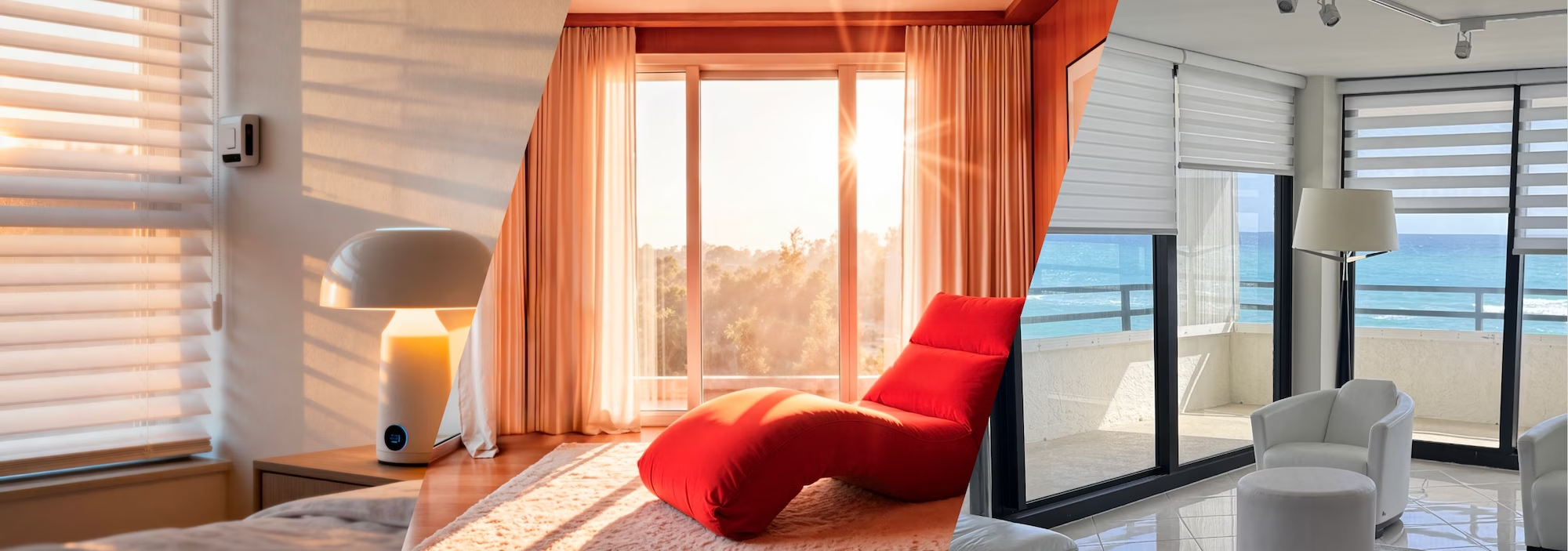
Choosing window treatments is one of the higher-stakes design decisions you'll make for your home. They affect how every room feels, how much you spend on cooling, how private your space stays, how long your floors and furniture last, and how the house presents itself from the street. In South Florida, the stakes climb even higher — intense UV, expansive impact glass, hurricane-prep needs, and a year-round sun load that punishes the wrong choice. This guide walks through the decisions in the order our designers walk you through them in person.
Shades vs blinds vs shutters: the three big categories
Most window-treatment confusion starts here, because the words are used interchangeably in casual conversation but mean specific, different things to a designer.
Shades
A shade is a continuous piece of fabric or material that raises and lowers as a single unit. Roller shades, cellular (honeycomb) shades, Roman shades, sheer shades (Hunter Douglas Silhouette), and woven wood shades are all subtypes. Shades read clean, contemporary, and minimal — the dominant choice for modern Miami homes and condos.
Blinds
A blind has individual horizontal or vertical slats that tilt for light control and lift for view. Wood blinds, faux wood blinds, aluminum mini-blinds, and vertical blinds are the common subtypes. Blinds are the most flexible for incremental light control — you can crack them, tilt them, or stack them — but they read as a slightly more traditional aesthetic. Best for transitional homes, offices, and rooms where adjustable light angle matters.
Shutters
A shutter is a hinged louvered panel that opens and closes against the window opening. Plantation shutters, the dominant style in South Florida, have wide louvers (typically 3.5" or 4.5") that tilt within a fixed frame. Shutters are the most architectural option — they integrate with the house, last decades, and add real resale value. Best for Mediterranean, traditional, and Coastal-style homes where the goal is permanence rather than flexibility.
The fast rule: shades for clean modern, blinds for adjustable function, shutters for architectural permanence. Most South Florida homes end up using two of the three across the house, picking the right one room by room.
Climate considerations specific to South Florida
The Miami climate forces three considerations that don't apply (or apply less) in other markets:
UV intensity
South Florida averages over 3,000 hours of sun a year. UVA penetrates standard glass and bleaches floors, fades fabric, and yellows art. Window treatments need to be specified by UV-blocking percentage — not just style preference. Solar shades with 1–3% openness factors block 95–99% of UV; sheer fabric without solar coating blocks closer to 30%.
Heat gain
South-facing and west-facing windows in Miami can transmit enormous amounts of heat at peak sun. The fabric you choose, the color of the back side, and whether it's open or closed during peak hours directly affects your AC bill. We typically recommend lighter-back fabrics for west-facing rooms (white reflects heat outward) and motorized schedules that close those shades during the hottest part of the day.
Humidity
Wood shutters and natural-fiber shades can warp in high humidity if they aren't engineered for the climate. Hardwood plantation shutters are fine in air-conditioned interiors but degrade fast in screened porches or outdoor lanais. Composite shutters (polymer-based) handle humidity perfectly and look identical to wood from across the room — the standard recommendation for Florida bathrooms, pool houses, and indoor-outdoor spaces.
Motorization: is it worth it?
Motorization adds to the cost of a window treatment, and how much depends on the brand, the motor and how it is powered. The honest answer to whether it's worth it is: in the right rooms, yes — in the wrong rooms, no.
Worth motorizing: tall windows, hard-to-reach windows, banks of three or more windows that should move together, west-facing rooms where a sun-tracking schedule pays for itself in AC savings, primary bedrooms where sunrise/sunset schedules add real quality of life, and media rooms where you want instant blackout.
Skip the motor: small bathrooms, closets, low-traffic guest bedrooms, and any window low and accessible enough that operating it manually takes one second. Don't motorize for the sake of motorization — spend the money on better fabric or better hardware instead.
If you're going to motorize, the brand depends on your smart-home setup. Hunter Douglas PowerView is the broadest-integration pick (Alexa, Google, HomeKit, Control4). Lutron is the high-end choice with the deepest reliability and the standard for whole-home Lutron systems. Somfy is the motor brand inside many third-party shades. Rollease Acmeda Automate is the cost-effective alternative with mainstream smart-home support.
How to choose by room type
Living room
The most-used room and the one most visible to guests — spend the most attention here. For modern condos and contemporary homes: roller shades with 3% solar fabric for daytime, paired with motorized drapery for soft evening light. For traditional homes: plantation shutters or woven wood shades. For homes with great views: sheer shades like Hunter Douglas Silhouette that preserve the view while controlling glare.
Primary bedroom
Privacy and blackout are non-negotiable. The strongest pick is a dual-shade system: solar shade for daytime, blackout shade for sleep. Top-down/bottom-up cellular shades work brilliantly when you want morning light from the top half of the window without losing privacy at the bottom. Motorize on a sunrise schedule and the room becomes effortless.
Kitchen and breakfast nook
Roller shades or woven wood shades in moisture-resistant fabrics. Avoid full drapery near cooktops (grease, splatter, fire risk). For a window over the sink, top-down/bottom-up cellular shades let in light from above while preserving privacy at counter height.
Bathrooms
Composite shutters (humidity-resistant, easy to clean) or top-down/bottom-up cellular shades. Skip wood shutters in bathrooms with showers — they will warp over five to seven years.
Home office
Glare control is the priority. A 1–3% solar shade behind your monitor blocks the worst glare while keeping the view. If you do video calls, a sheer shade like Silhouette gives you flattering diffused light — the kind of light that makes you look professional on Zoom without a ring light.
Children's rooms
Cordless or motorized only. Corded blinds and shades are a child-safety hazard. Every reputable brand offers cordless lift mechanisms or full motorization. Pair with blackout shades for naps and bedtime.
Indoor-outdoor spaces (lanais, screened porches)Exterior solar shades with weather-resistant fabric, motorized for storm closure. They block 90–95% of heat at the source — outside the glass — which is dramatically more effective than interior shading for indoor-outdoor living.
Budget guide: what drives the price
Custom window treatments are not a commodity item, so a generic price list would mislead you. Five things set the number on your proposal:
- Product type. Roller, cellular and sheer shades, shutters and drapery are built differently and priced differently.
- Fabric or material. Solar screens, blackout fabrics, designer weaves, composite or hardwood all move the price.
- Window size and count. Oversized glass and walls of windows need wider tubes, stronger hardware and more material.
- Motorization. Battery, plug-in or hardwired motors, plus any smart-home integration.
- Installation conditions. Ceiling pockets, high windows, specialty shapes and building access rules.
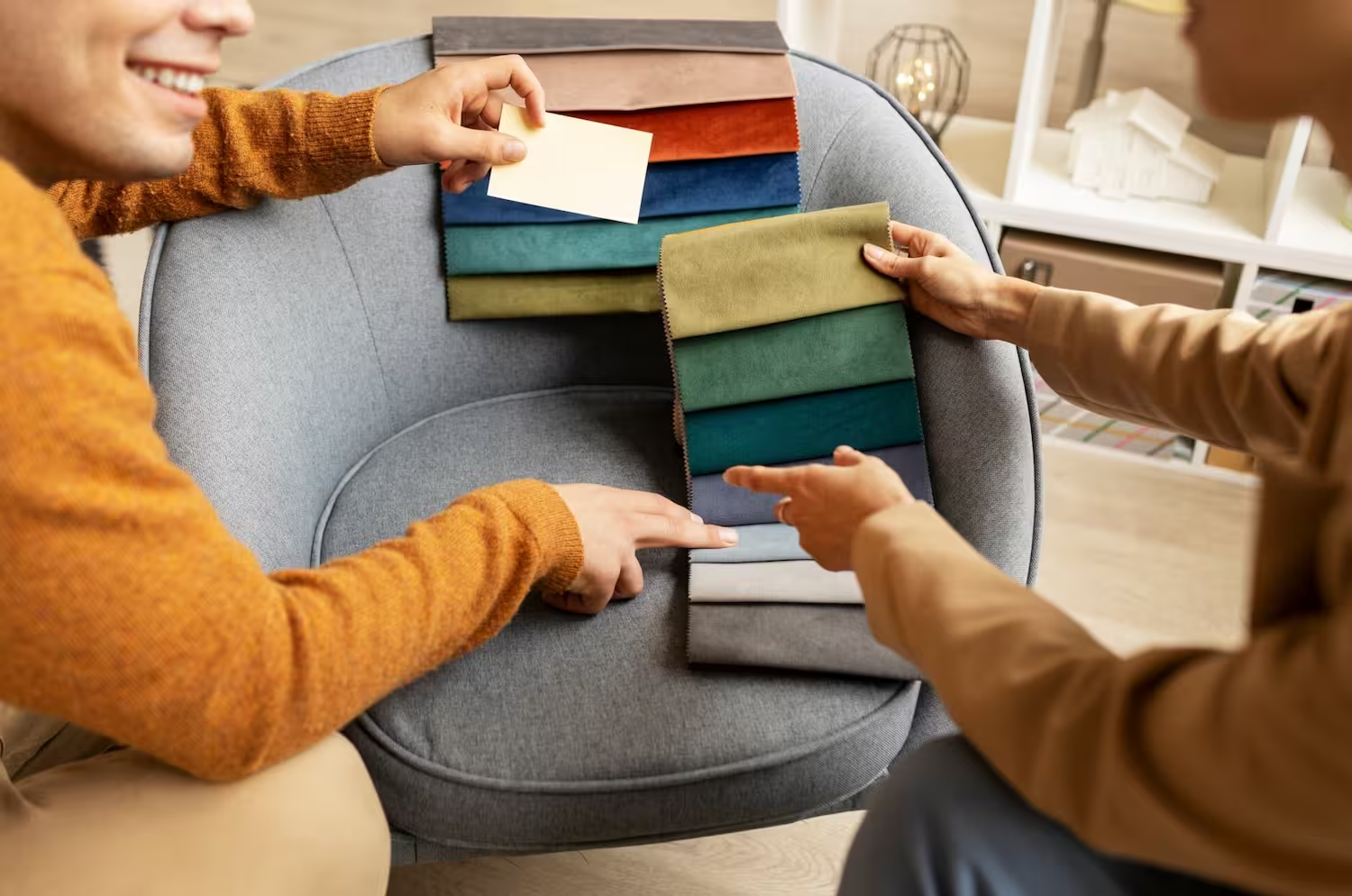
The fastest way to a real number is a free in-home consultation. You can also send a photo of your windows for a free quote. We measure, confirm the options that suit each room and give you a written price per opening.
Where it makes sense to save: powder rooms, closets, laundry rooms and rarely used guest spaces. Where it does not: the living room, primary bedroom, kitchen and any room visible from the front door. Stock blinds in those rooms show from the street and from every chair.
The mistakes we see most often
Five repeating mistakes that cost homeowners money and aesthetics:
- Buying the wrong openness factor. Choosing 5–10% openness for a west-facing Miami living room and then wondering why glare is still bad and the AC bill hasn't changed. The right answer for west-facing is 1–3%.
- Mixing too many systems in one room. Roller shades on one window, plantation shutters on another, and drapery on a third reads cluttered. Pick one primary system per room.
- Skipping motorization on tall windows. The owner gets tired of the chain after a year and the shade ends up permanently stuck at one height — wasting the entire feature.
- Cheap hardware on premium fabric. The fabric is the visible part but the hardware is what fails. Spend on the brackets, cassettes, and motors; the fabric upgrade matters less than the install.
- Ignoring HOA approval until after fabrication. Most condo HOAs require white or off-white liners on anything visible from outside. Confirm in writing before fabrication or you'll be paying for a remake.
How to start the conversation with us
Schedule a free in-home consultation. We'll measure every window, photograph each opening, walk through the rooms with you, and build a written proposal with brand, fabric, motorization, and pricing per opening. No pressure, no upsell — just a designer talking through what works for your home and your budget.
Miami Shades has installed window treatments across Miami, Coral Gables, Aventura, Sunny Isles, North Miami, Fort Lauderdale, Boca Raton, and Palm Beach. Whatever your house, condo, or budget, we know which products work and which don't — and we'll tell you straight.