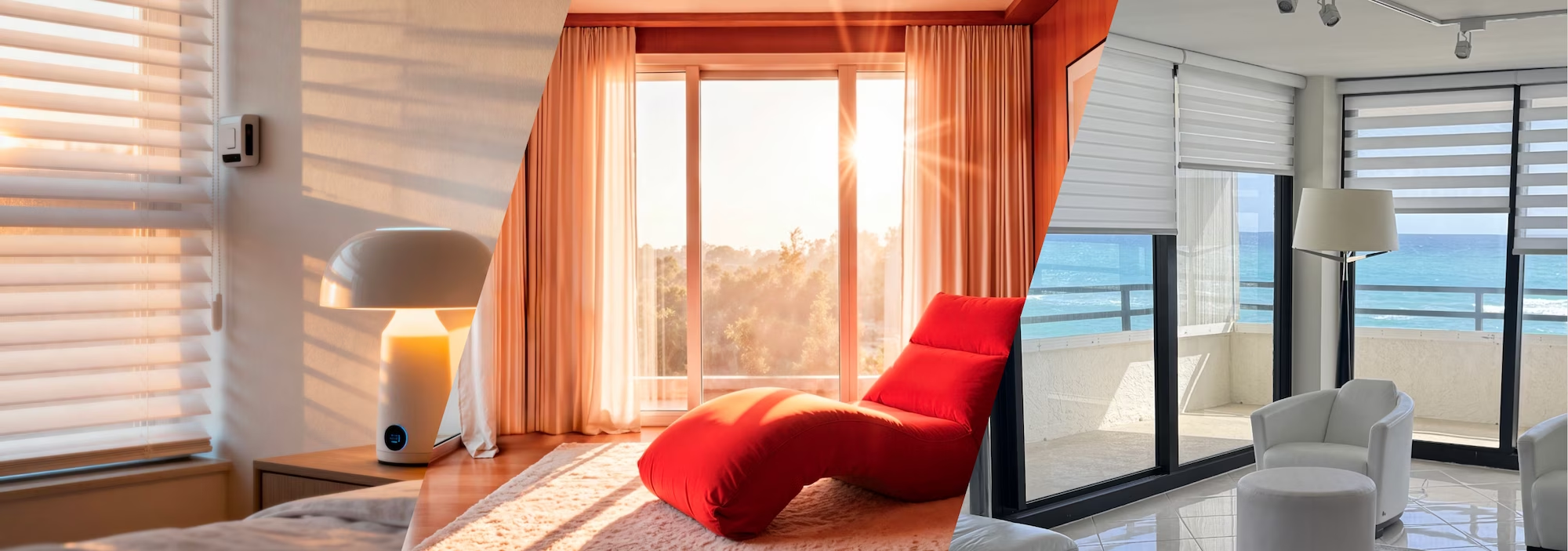
If you live in a Miami condo, your windows are doing a lot of work. They are catching ocean views, framing the skyline, pouring in afternoon sun, and putting your living room on display for every neighbor in the next tower. The right window treatments turn those windows into an asset. The wrong ones cost you on your AC bill, fade your furniture, and force you to either live in glare or live with the lights off. This guide is built specifically for Miami condo owners — high-rise glass, HOA rules, intense UV, and design that has to look as good from the street as it does from the sofa.
Why do Miami condos need a different approach to window shades?
A single-family home in Coral Gables and a 28th-floor unit on Brickell are not the same project. Condos add a layer of constraints that change every recommendation:
- Floor-to-ceiling glass. Standard rod-pocket drapery won't span a 10-foot expanse without sagging or looking residential. You need engineered hardware and shades sized to the opening.
- HOA aesthetic rules. Most Miami buildings require white or off-white linings on anything visible from outside. Choose a fabric the building approves and confirm in writing before fabrication.
- Limited drilling. Some buildings restrict mounting into ceilings, hurricane-impact frames, or concrete shear walls. Inside-mount and tension-fit options matter.
- Electrical access. Hardwiring motorized shades on the 30th floor is a different story than a ground-floor home. Lithium battery and plug-in motor options become important.
A condo install isn't harder — it's just specific. The brands and configurations that work for a Pinecrest home aren't the brands and configurations we recommend on Brickell or Sunny Isles.
How do you get privacy in a Miami high-rise?
Privacy in a Miami condo is a 24-hour question. During the day, neighbors across the courtyard can see in if you're below the 8th floor. At night, every interior light turns your unit into a lit aquarium for anyone with a balcony view. And in many south-facing units, sunset glare forces you to pull treatments fully closed for two hours every evening — losing your view exactly when it's at its best.
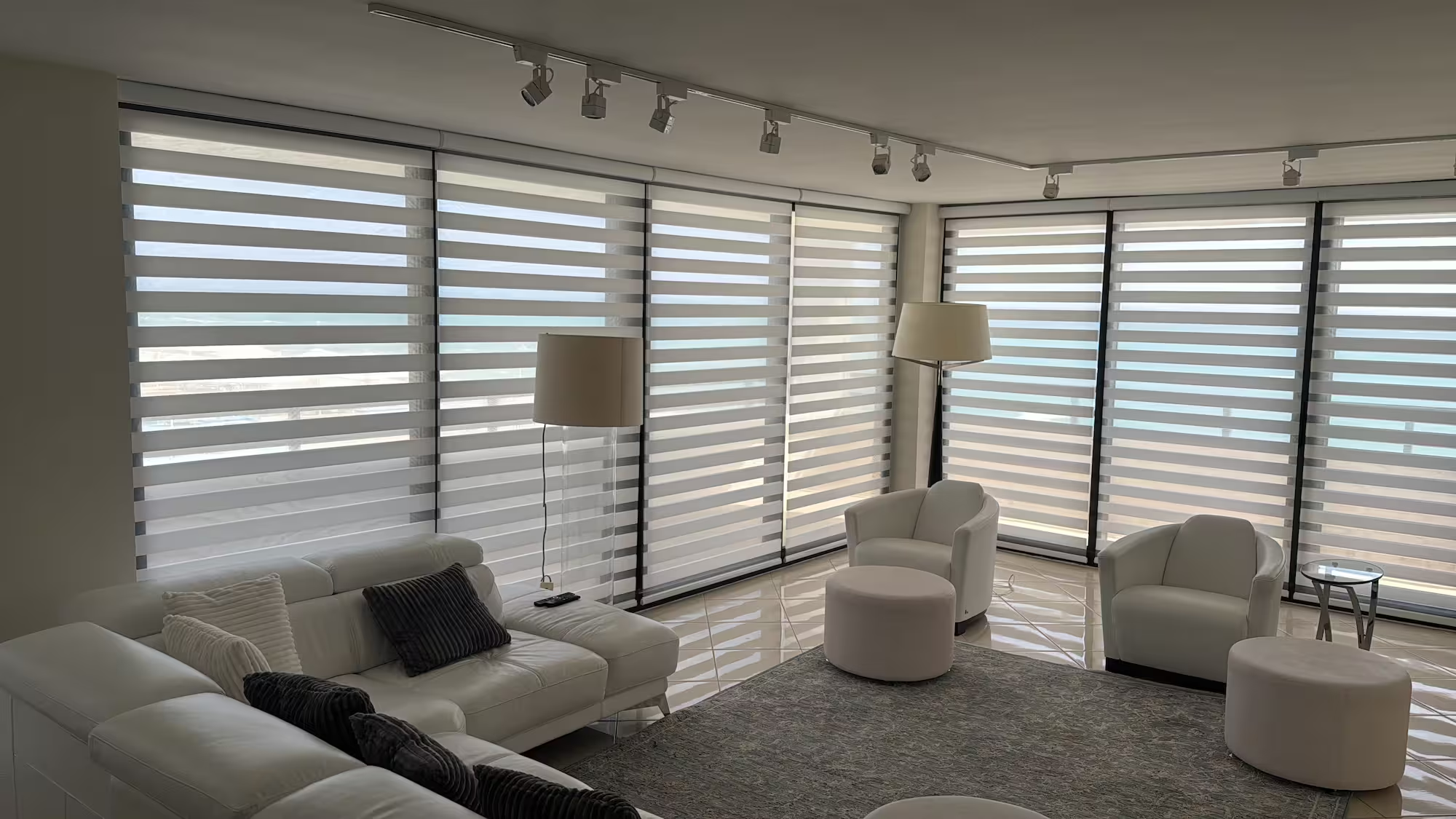
The fix is layering function. The single best privacy solution we install for Miami condos is a dual roller shade: one solar screen for daytime UV and glare control with the view preserved, plus one blackout or room-darkening shade for evenings and bedrooms. Both roll into the same headrail, both can be motorized, and you operate them independently depending on the time of day.
For units below the 8th floor or with direct sightline neighbors, we also recommend top-down/bottom-up cellular shades in bedrooms and bathrooms. They let daylight in from the top half of the window while keeping the bottom half private — the only window treatment style that solves the "I want light but I'm three feet from another building" problem cleanly.
How much UV and heat can shades block in a Miami condo?
South Florida sees roughly 3,000 hours of sun a year. UVA penetrates glass and bleaches everything it touches — hardwood floors, leather sofas, area rugs, art. Heat gain through unshaded glass can raise interior temperatures 8–12°F above the rest of the building, which forces your AC to run longer and harder.
The right shade fabric makes a measurable difference. We specify by openness factor — the percentage of the fabric that is open weave versus closed:
- 1% openness solar shades: Maximum UV block (97–99%), maximum glare control. The view is darkened but visible. Best for west and southwest exposures with intense afternoon sun.
- 3% openness: Excellent UV block with a clearer view. Our most-recommended fabric for Miami living rooms and view-side bedrooms.
- 5–10% openness: Brighter view, less heat reduction. Works for east-facing units and rooms with morning-only sun.
For maximum heat reduction without losing the view, we pair a 3% solar shade with a low-E coating on the glass and a motorized schedule that closes the shades automatically at the hottest part of the afternoon. Owners typically see a 10–20% reduction in AC runtime in west-facing rooms after the install.
Which window shades work best in Miami condos?
The comparison table at the end of this article sums up solar, dual, cellular, blackout and motorized shades side by side. Here is what each style does well. For fabrics and options, see our custom shades and motorization pages.
Roller shades
Clean, modern, and the most popular choice for Brickell, Edgewater, Sunny Isles, and Aventura high-rises. They sit flat against the window when raised, disappear into a recessed pocket when configured that way, and accept any solar fabric. Hunter Douglas Designer Roller Shades and Lutron Sivoia QS are the two systems we install most often in Class-A buildings.
Cellular and honeycomb shades
The strongest performer for energy efficiency. The honeycomb cells trap air and create an insulating layer between the window and the room — meaningful in west-facing units. Hunter Douglas Duette is the category leader and the only honeycomb we recommend for full-width Miami windows because its hardware spans wider openings without center support.
Sheer shades
Hunter Douglas Silhouette is the standout. Horizontal fabric vanes float between two sheer fabric panels, so you can tilt them open for view and light or closed for privacy. They give you the soft, diffused light most condo owners want without the visual weight of drapery. Best for living rooms and primary bedrooms with views worth keeping.
Motorized drapery
For 12-foot ceilings and a more residential feel, motorized drapery on a Lutron or Somfy track gives you the soft layer most condos lack. We recommend ripple-fold or pinch-pleat headings on a recessed ceiling track so the rod disappears and the fabric reads as architecture. Pair with roller or solar shades behind for full UV and privacy control.
Plantation shutters
Less common in modern Miami condos because the louvers can compete with floor-to-ceiling glass aesthetically — but a strong choice for Coral Gables, older Coconut Grove buildings, and Mediterranean-style units. We specify hardwood or composite depending on the room's humidity exposure.
Are motorized shades worth it in a Miami condo?
Motorized shades earn their keep faster in a high-rise than almost any other home type. Three reasons:
- Reach. A 9-foot or 10-foot window is awkward to operate manually. A wand or chain pulled twice a day, every day, leads to broken hardware and fabric wear.
- Schedules. Miami sun peaks in predictable windows. A motorized shade on a sunset schedule closes itself at the right time without you remembering — protecting furniture, reducing AC load, and preserving the view at 6 PM instead of 4.
- Multi-window banks. A wall of three or four windows looks dramatically better when all shades move in unison. Manual operation guarantees they end up at four different heights.
The two motor systems we install most in Miami condos are Hunter Douglas PowerView (built into the shade, app-controlled, integrates with Alexa and Google Home) and Lutron Sivoia QS (whisper-quiet, best-in-class reliability, integrates with full-home Lutron systems). For owners who don't want to hardwire, both offer rechargeable lithium battery options that last 12–24 months between charges.
What do Miami HOAs approve?
Most Miami buildings require window-treatment approval through the management office. The two questions that come up every time:
- What color shows from outside? White or off-white liners are usually mandatory. Hunter Douglas, Lutron, and Somfy all offer white-back fabrics as a standard option.
- Is anything mounted into the impact window frame? Many buildings prohibit drilling into the impact glass frame because it can void the building's hurricane warranty. Inside-mount installs that anchor into the surrounding wall — not the frame — solve this. We confirm this with the building before fabrication.
We submit the spec sheet, fabric sample, and mounting plan to your HOA on your behalf as part of every Miami condo project.
How do you keep a condo look instead of a house look?
The biggest mistake we see in condo window treatments is borrowing a single-family-home aesthetic. Heavy drapery, dark wood blinds, and ornate hardware fight the clean lines of modern condo architecture. The condo aesthetic that works:
- Recessed pockets where possible. A recessed roller pocket in the ceiling makes the shade disappear when raised. Worth the slightly higher install cost on view-side windows.
- Continuous fabric across multi-window banks. Specify "wall-to-wall" rather than "window-by-window" so the shades read as one unified surface.
- Restrained palette. White, ivory, oyster, light grey, light tan. Save the color statement for art, rugs, and accent pieces — not the window.
- One material per room. Mixing roller shades on one window and shutters on another in the same room reads as cluttered. Pick one primary system per space and stay disciplined.
What does a Miami Shades condo project look like?
Every Miami condo project we do follows the same five-step process:
- In-home consultation. We measure every window, photograph each opening, and walk through your daily light, privacy, and view priorities room by room.
- HOA submission. We package the spec sheet, fabric sample, and mounting plan and submit to your building's management office for approval.
- Custom fabrication. Each shade is built to the exact opening with the approved fabric. Lead time is typically 3–5 weeks for Hunter Douglas and Lutron, faster for stock fabrics.
- Professional installation. Our installers handle elevator scheduling, building access, and mounting without involving you. Most condo installs finish in one day.
- Walkthrough and motor programming. If your shades are motorized, we set up the app, schedules, and any voice integration before we leave. You shouldn't have to read a manual.
Who is Miami Shades?
Miami Shades is a South Florida window treatment company based at 2750 NE 183rd St in Aventura, FL. The team designs, installs, motorizes and repairs shades, blinds, shutters and drapery for condos and homes across Miami-Dade, Broward and Palm Beach. We work with Hunter Douglas (including PowerView), Lutron, Somfy, Graber, Levolor and Rollease Acmeda, and we are rated 5.0 from 30 reviews. Call (786) 373-7374 to talk to the team.
How do I get started?
Miami Shades has installed window treatments in condo buildings across Brickell, Edgewater, Sunny Isles, Aventura, Bal Harbour, Miami Beach and the South Florida coast. We know which buildings want which fabric, which HOAs approve which mounts, and how to keep the install painless from elevator booking to final walkthrough.
Book your free in-home consultation and we will bring fabric samples, motorization demos and a no-pressure walkthrough of every window in your unit. Prefer to start online? Send a photo of your windows for a free quote.
Frequently Asked Questions
What is the best window shade for a Miami condo with floor-to-ceiling glass?
A solar roller shade at 3% openness suits most view-side glass. It cuts glare and UV while keeping the view. On west-facing glass with strong afternoon sun, 1% openness gives more heat and glare control.
What shade gives me a daytime view and nighttime privacy?
A dual roller shade. It holds a solar shade and a blackout shade in one headrail, so you use the solar layer by day and lower the blackout layer at night. Both layers can be motorized.
Do I need HOA approval for new shades in my condo?
Usually, yes. Most Miami buildings ask for the product spec, a fabric sample with a white or off-white exterior backing, and the mounting plan. Miami Shades prepares and submits that package for you.
Can shades be installed without drilling into impact window frames?
Yes. Shades can mount inside the opening or into the surrounding wall or ceiling, leaving the impact frame untouched. We confirm your building's rules before anything is made.
Can I motorize shades in a condo without new wiring?
Yes. Rechargeable battery motors from Somfy, Lutron and Hunter Douglas PowerView need no electrician. They run by remote, app, wall switch or voice.
Are cellular shades good for Miami condos?
Yes, especially in west-facing rooms and bedrooms. The honeycomb cells trap air and slow heat gain, and top-down/bottom-up versions let light in from above while keeping the lower window private.
How much do condo window shades cost?
It depends on the shade type, fabric, window size and whether you motorize. Book a free in-home consultation or send a photo of your windows for a free quote with a written price for each opening.