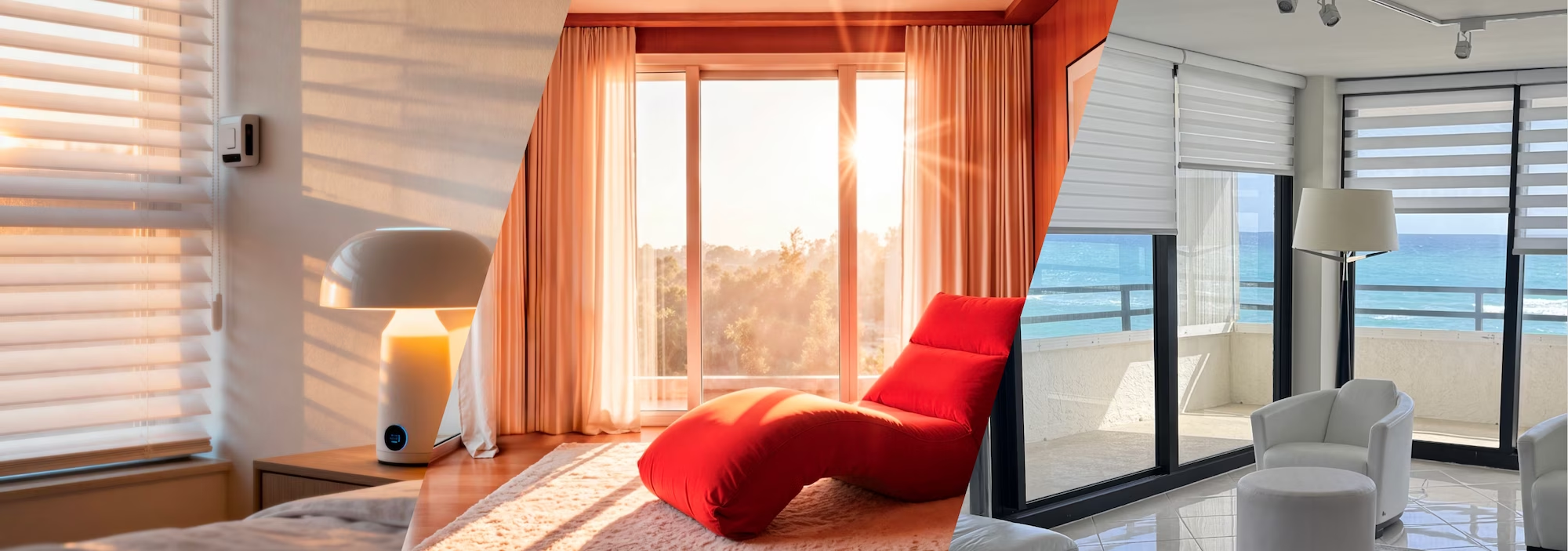
Miami Beach is one of the most beautiful places in the country to own a home — and one of the hardest on a window. Between the Atlantic salt air, the intense year-round UV, and the preservation and condo-board rules that come with Art Deco and oceanfront buildings, the treatment that looks great in a showroom often fails fast here. This guide covers the window treatments that actually hold up in Miami Beach, why they work, and how to choose for your building.
Why Miami Beach is uniquely hard on window treatments
Three forces work against a window treatment on the beach. Salt air corrodes untreated metal hardware and breaks down standard fabrics and cords. UV exposure is relentless on ocean- and bay-facing glass, fading materials and heating rooms. And building rules — whether Art Deco historic-preservation standards in South Beach or the HOA requirements of a Mid-Beach tower — often dictate what can go on the window and how it can be mounted. A treatment for Miami Beach has to answer all three, not just look good.
Solar shades: the workhorse for oceanfront light
For most Miami Beach rooms, solar shades are the starting point. Solar fabric is rated by openness factor — the tighter the weave, the more heat and glare it blocks while still preserving the view. On east-facing bedrooms you can layer a blackout shade for true darkness at sunrise; on living rooms with big water views, a lower-openness solar shade cuts the heat and UV without giving up the ocean. Specified in coastal-grade fabric, solar shades resist the fading and mildew that kill ordinary materials near the water.
Shutters: choose composite over wood near the water
Interior plantation shutters bring architectural character that suits both Art Deco interiors and modern condos — but material matters enormously on the beach. Real wood can warp, swell, and crack in the salt-heavy humidity. Composite and vinyl-core shutters are engineered to stay dimensionally stable in exactly these conditions, which is why we recommend them for Miami Beach far more often than wood. They deliver the same clean louvered look with none of the coastal warping.
Motorization built for salt air
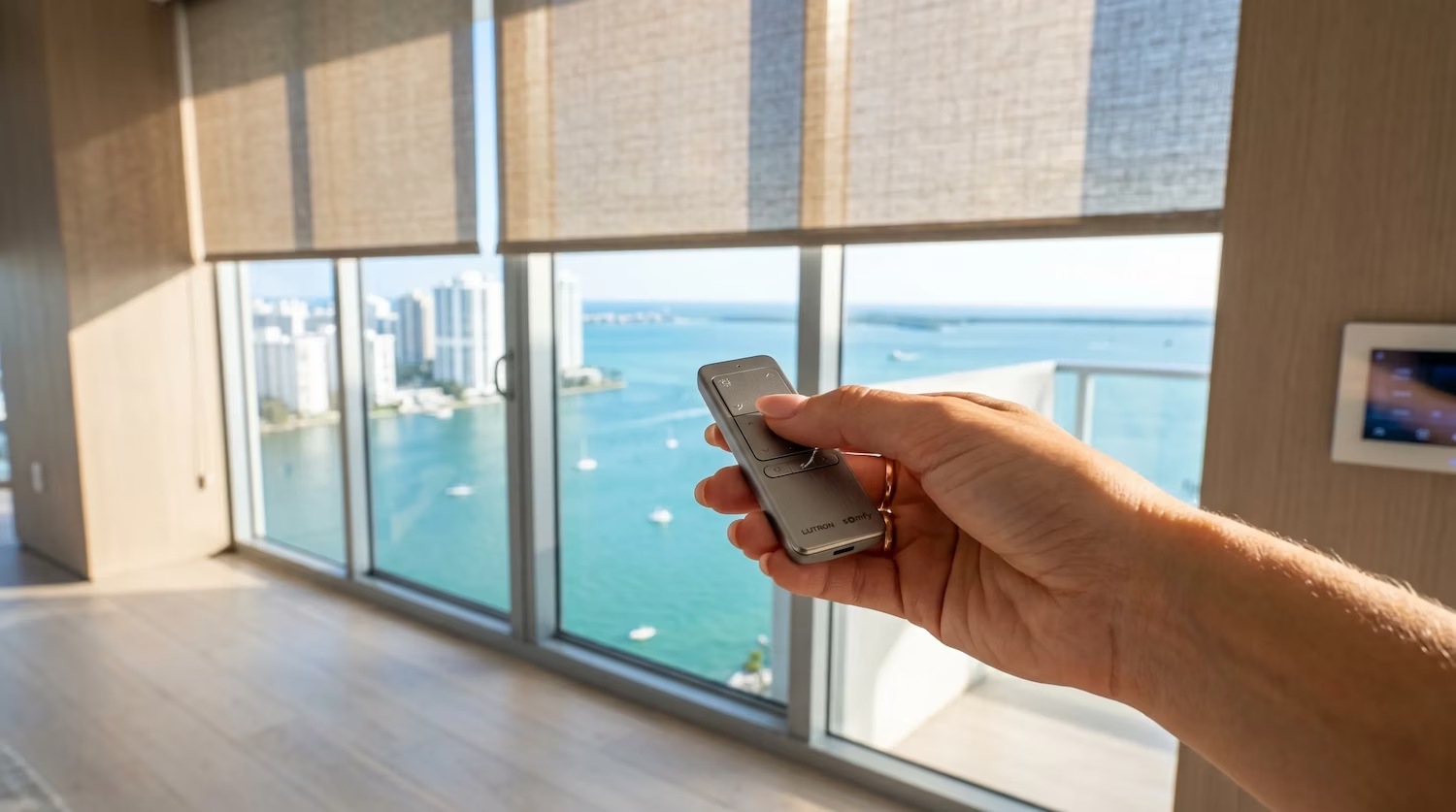
Oceanfront glass is often tall and hard to reach, which makes motorization practical rather than a luxury. The key on the beach is corrosion-resistant hardware — marine-grade components and sealed motors that won't pit or seize in salt air. Motorized solar shades can also run on a schedule, dropping through the hottest part of the day to protect interiors and cut cooling load, then rising for the evening view. Done right with the correct hardware, motorization lasts; done with standard parts, it fails early near the water.
Working within Art Deco and condo rules
Many Miami Beach projects come with a rulebook. Historic South Beach buildings may limit visible changes; Mid-Beach and oceanfront towers typically require board-approved, uniform treatments with no exterior alterations. The practical answer is interior systems with concealed hardware and neutral street-facing fabrics that satisfy the board while giving you the light control you want inside. We handle these approvals routinely, so the treatment clears the building before it goes in.
Matching the treatment to your building
Every Miami Beach home is a little different, but the patterns are consistent:
- South Beach Art Deco condo: composite shutters for character, plus solar shades on the sun side, all within preservation limits.
- Mid-Beach / oceanfront tower: board-approved motorized solar shades on floor-to-ceiling glass, blackout in bedrooms, corrosion-resistant hardware throughout.
- Star, Fisher, or Indian Creek estate: layered solar shades and designer drapery with concealed motorization for tall windows.
For the full picture on our Miami Beach service — neighborhoods, building types, and salt-air specifics — see our Miami Beach window treatments page.
Start with a free in-home consultation
Salt air, UV, and building rules make Miami Beach a place where getting the spec right matters. Miami Shades is a family-owned, bilingual team serving South Florida since 2016, with deep experience in oceanfront condos and historic buildings. Book a free in-home consultation and we'll assess your exposure, confirm your building's rules, and recommend materials that last.
Frequently Asked Questions
What window treatments hold up best to salt air in Miami Beach?
Coastal-grade solar and blackout shade fabrics, composite or vinyl-core plantation shutters, and motorized systems built with marine-grade, corrosion-resistant hardware hold up best. Real wood shutters and standard indoor fabrics and metal parts tend to warp, fade, or corrode quickly in oceanfront salt air, so materials should be specified for the environment.
Are solar shades or blackout shades better for an oceanfront condo?
Both, used where they fit. Solar shades cut heat and glare on living areas while preserving the water view, and blackout shades give true darkness in bedrooms — especially east-facing rooms that catch the sunrise. Many Miami Beach condos layer the two so each room gets the right level of light control.
Can I put plantation shutters in a Miami Beach condo?
Yes, but choose composite or vinyl-core shutters rather than real wood. The salt-heavy humidity near the ocean can warp and crack natural wood, while composite shutters stay dimensionally stable and deliver the same louvered look. Check your building's rules first, as some towers require board approval for visible treatments.
Will my condo board approve motorized shades?
Usually, yes — interior motorized shades with concealed hardware and neutral street-facing fabrics typically satisfy HOA requirements because they involve no exterior changes. We handle board approvals routinely and prepare treatments that meet uniform-appearance rules before installation.